
The College Tour Hasn’t Changed in 30 Years. Students Have
Why the campus tour falls short and how families get real answers today
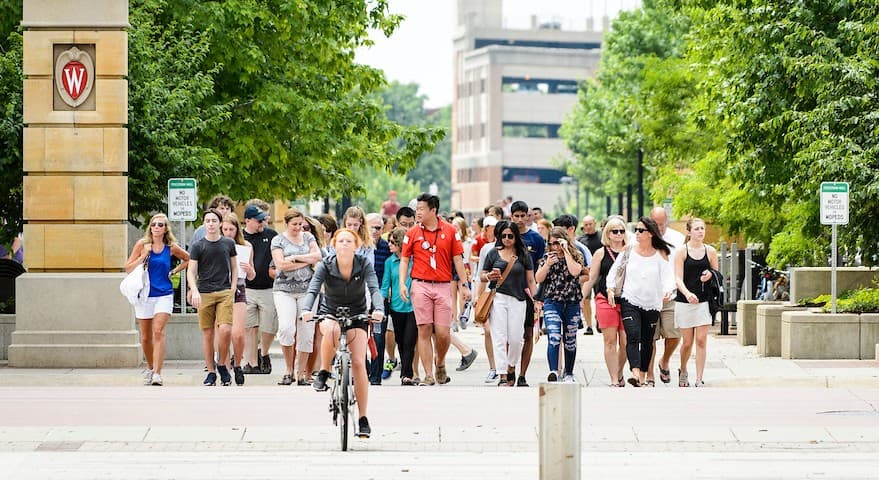
If you went to college in the ’80s, ’90s, or 2000s, you probably remember the tour. You and your parents showed up on campus, sat through an information session, and then followed a cheerful student who walked backward and pointed at buildings. That was how you worked out whether a school had the vibe, the academics, and the support worth four years of your life.
The tour hasn’t changed since then. It’s the same information session, the same scripted route, and the same backward-walking guide reading off the same list of buildings. If you’re a parent taking your kid on visits today, it may feel like déjà vu.
The World Changed. The Tour Didn’t.
While the tour stayed the same, everything around it changed. The format was built for a time when the campus visit was a family’s main source of information. Today, by the time a family pulls into the visitor lot, they’ve already been through the website, read the rankings, flipped through the brochure, and watched a dozen student videos.
Yet the tour still assumes they arrive knowing nothing. It starts by collecting names, hometowns, and intended majors. Then comes an information session covering material that’s already on the website and in the brochure. It’s no surprise that so many students leave feeling like they spent a whole day, plus a tank of gas, learning nothing new.
We’ve Been There
At Vivaday, we know that feeling firsthand. We’re students who transferred colleges after picking schools based on tours designed for everyone rather than for what we needed.
This isn’t a knock on the colleges or their tour guides. It’s a structural problem, and it gets heavier for families every year. The cost of college keeps climbing and graduation requirements keep getting more specific. And because a school’s finances depend so much on enrollment, the information families get is polished to persuade rather than to inform.
How Families Are Working Around the Tour
What families want from a visit is information that’s personal to them: the kind that gives them the clarity and confidence to picture themselves there. When the tour doesn’t offer that, they look for it somewhere else. You can see it in three trends:
Families wait until admitted student days to visit for the first time, instead of using the tour to decide where to apply.
Advisors tell families to skip the script and stop current students around campus to ask questions.
Families turn to Reddit, Instagram, and TikTok for unfiltered insight from students no one can verify.
Each of these workarounds makes sense, and each one has a catch.
Waiting for Admitted Student Day
Families wait for admitted student days because they know the regular tour won’t tell them much they haven’t already read. But by then the application is in, the fees are paid, and the essays are written. The visit that should have helped decide where to apply has turned into a few frantic weeks before a deposit deadline. And let’s be real about what admitted student days are for: they’re built to get you to say yes, not to help you figure out whether you should.
Stopping Students on Campus
Advisors know this, which is why so many tell families to flag down a current student and start asking questions. It’s good advice, because students will tell you things a tour guide won’t. But it’s a lottery. You get whoever happens to walk by, usually for two minutes on their way to class. They may not be in your major or have any idea what you’re trying to find out.
Asking the Internet
So families go online. Reddit, Instagram, and TikTok feel more honest than any brochure, and sometimes they are. But there’s no way to know whether the person posting goes to that school, graduated five years ago, or has never set foot on campus. You’re making one of the biggest financial decisions of your life based on comments from strangers.
The Cost of Just Showing Up
Then there’s the cost of just getting to campus. Flights, hotels, time off work, and missed school days add up fast when you’re looking at eight or ten schools. Most families can’t visit every school they’re curious about, so some schools get crossed off the list before the student ever gets a real look.
What Families Want
Strip all of that away and what families want is simple. They want a real conversation with a real student who goes there, studies what they want to study, and has time to answer questions honestly. They want it while they’re still deciding where to apply, and they want it without spending a fortune on travel.
That’s exactly what we were missing. We took the tours, sat through the information sessions, walked the routes, and still ended up at schools that weren’t right for us. Nobody on those tours knew what we were looking for, because the tour was never built around us.
A Better Way to Tour
So we built Vivaday. We connect prospective students with verified current students for one-on-one virtual college tours. Instead of a scripted walk, you get a real conversation with someone who shares your interests and the path you’re considering. You can ask about classes, advisors, the social scene, the dorms, and everything else the information session skips. You can do it from home, for every school on your list, long before admitted student day.
The Campus Visit Still Matters
The campus visit still has its place, because nothing replaces walking around the place you might call home for four years. But that visit should confirm what you already know. It shouldn’t be the first time you find out whether a school fits you.
Start with a conversation, not a commute.